The Homestead Dream Doesn't Come Cheap (And Nobody Warned Me)
Let's talk about the money side of "simple living" — because it's anything but simple.
HOMESTEADING
Mallory Dagher
3/24/20263 min read
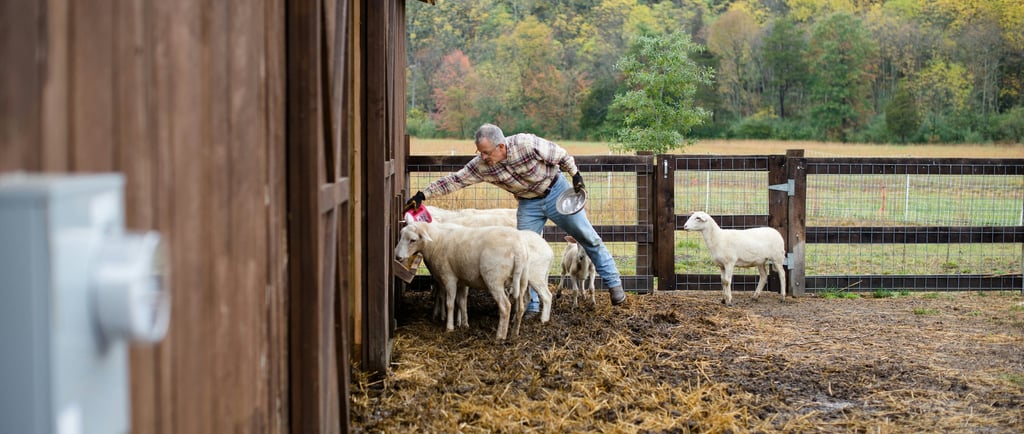
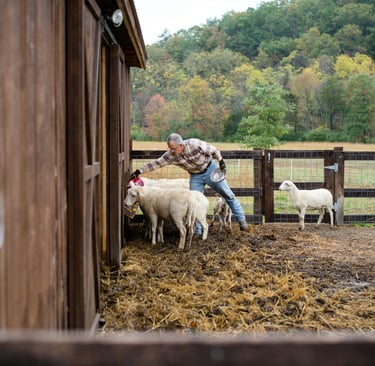
I remember the moment I fell in love with the idea of homesteading. It was a Saturday morning, coffee in hand, scrolling through photos of dewy gardens and fresh eggs and women in linen aprons who looked completely at peace. I thought: that's it. That's the life. Simple. Slow. Cheap.
Ha.
Here's what nobody puts in the caption under that gorgeous flat-lay of heirloom tomatoes: the startup costs that made your eyes water. The feed bills that showed up the same week as three other unexpected expenses. The list of supplies that somehow keeps growing even though you were supposed to be simplifying.
If you've been on this homesteading journey for more than five minutes, you already know what I'm talking about. And if you're just getting started and someone handed you this post — hi, welcome, I'm about to save you from a little shock.
The Lie We All Believed: "It'll Save Us Money"
Let me be real with you, because that's what we do here.
The dream of homesteading is deeply tied to this idea of financial freedom. Grow your own food. Raise your own animals. Stop depending on the grocery store. And yes — eventually, that can be true. But eventually isn't now, and now is where most of us are living.
Right now looks a lot like:
Feed costs that add up faster than you expected. You got chickens because eggs are expensive, right? And then you did the math on feed, and you looked at the sky, and you took a deep breath. Whether you're raising chickens, goats, pigs, or cattle — the monthly feed bill is real and it is relentless.
Supplies that somehow multiply. You needed a waterer. Then a feeder. Then a different feeder because the first one didn't work. Then something for the garden, and then something to fix the something for the garden. The list doesn't end — it evolves.
Equipment that costs more than you planned. A quality tiller. A chest freezer (or two). Canning supplies. Fencing. A good pair of boots that will actually last. These aren't luxuries — they're the infrastructure of this lifestyle. And infrastructure is expensive.
Starting from scratch — all at once. This might be the hardest part. Because you're not just buying one thing. You're building an entire system at the same time. The garden AND the animals AND the preservation supplies AND the tools. All in the same season. All on the same budget.
Here's What I Want You to Know
You are not failing because this costs money. You are not doing it wrong because your first year (or second, or third) isn't profitable. You are not naive for wanting this life even when it's hard.
You are doing something countercultural and brave and real. And the learning curve has a price tag — it always does.
The women I admire most in this space didn't wake up with a perfectly efficient homestead. They built it slowly, made mistakes, pivoted, and kept going. They learned which investments were worth it and which ones were a waste. They found their people, shared their knowledge, and stopped pretending the romanticized version was the whole picture.
The whole picture includes the hard stuff. It includes the expensive weeks and the equipment failures and the "why did I think this was a good idea" moments at 6am in the rain.
And it also includes the pride. The knowing exactly where your food came from. The kids who understand where eggs actually come from. The quiet that settles over you when you realize you are building something — even when it's messy and slow and costs more than the Pinterest version suggested.
So What Do You Do With This?
You stop comparing your chapter one to someone else's chapter ten.
You get strategic — not defeated. You prioritize the investments that will serve you the longest. You find community with people who will help you learn what's actually worth the money. You give yourself grace for the season you're in right now.
And you keep going.
Because the goal was never to make it look easy. The goal was to build a life that's meaningful — and that's worth every complicated, expensive, beautiful step.